Tool Fingerprint Drift: Review Changes Before Use
Tool fingerprint drift means the recorded tool definition differs from its approved baseline. It is a signal to review a change, not proof that the change is malicious. Current canonical MCP execution denies calls to a drifted tool until re-approval.
The supply-chain problem for AI tools
AI agents depend on tools they didn’t write – MCP servers, third-party APIs, internal services. Each is a supply-chain dependency, and supply chains get attacked. The particular danger for agents is that a tool can change after you’ve approved it. You vet a tool, decide it’s safe, wire it into your agent. Later – through a compromised server, a malicious update, or an injected descriptor – the tool’s behavior changes. Your approval is now out of date, and nothing tells you that unless you’re watching for the change.
A familiar tool name does not show whether its definition changed. Contract fingerprints provide one way to detect changes in the recorded fields; repository review, signed releases and runtime controls cover other evidence.
A legitimate update and a malicious change can both cause drift. Review the difference before accepting a new baseline.
Tool pinning: establishing the baseline
Current canonical MCP pinning hashes the tool name, description and argument schema. The digest is computed at discovery and sync and compared with the approved definition at decision time.
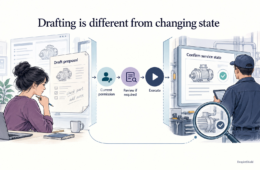
Figure: A current tool contract is compared with its approved fingerprint; a difference becomes a policy input and requires an intentional review before re-pinning. Current canonical MCP definition drift uses denial until operator re-approval; legacy configurable postures do not override it.

Drift as a policy operand
What makes fingerprint drift powerful is that it isn’t just an alert – it’s an attribute your policies can evaluate at decision time. The fingerprint_drift operand sits alongside attributes like agent risk level and data class in the ABAC policy engine. So you can write policies like “deny any call to a tool whose fingerprint has drifted” or “require human approval for drifted tools handling restricted data.”
The current canonical MCP decision checks the pin before execution. A drifted definition is denied until an operator re-approves it; the check cannot identify hidden implementation changes that leave the recorded definition unchanged.
What drift detection catches
Change | Canonical MCP pin signal | Limit to remember |
|---|---|---|
Tool description changes | The description contributes to the pinned digest | A changed description is a review signal, not proof of an attack |
Tool name changes | The name contributes to the pinned digest | Verify tool identity and origin separately |
Argument schema changes | The schema contributes to the pinned digest | Review changed inputs before accepting the new surface |
Origin or implementation changes | Not established by the three-field MCP surface pin alone | Use separate source, deployment and implementation checks |
Drift and the AIBOM
Fingerprint drift and the AI Bill of Materials are two views of the same underlying mechanism. The AIBOM is the inventory – every tool, its pinned fingerprint, and its current drift state, exported as a CycloneDX document. Drift detection is the runtime enforcement – the policy check that acts on that state at decision time. Together they give you both the audit artifact (here’s every tool and whether it’s drifted) and the live control (drifted tools get blocked or queued).
Operationalizing drift detection
- Pin every tool to its contract fingerprint at the moment you approve it.
- Refresh observed MCP definitions at discovery and sync, then compare the digest with the approved pin at decision time.
- Expose fingerprint_drift as a policy operand so drifted tools trigger your chosen verdict.
- For canonical MCP definition drift, calls are denied until operator re-approval. Configurable legacy integrity postures should not be described as overriding that rule.
- Re-pin on purpose after a legitimate tool update, so intended changes don’t show up as false positives.
Tool fingerprints make changes in recorded definitions visible. Keep this control alongside identity checks, repository review, dependency controls and least-privilege authorization.
How DeepintShield approaches this
DeepIntShield pins the MCP tool name, description and argument schema. A changed definition becomes pending and calls are denied until review. An operator approves the exact pending digest; a reverted upstream definition clears its pending state. The comparison does not inspect all remote implementation behavior.
Frequently asked questions
What is fingerprint drift?
Fingerprint drift is the signal raised when an AI tool’s contract – its name, declared behavior, and argument schema – has changed since it was last pinned and verified. It’s the runtime tripwire for supply-chain attacks against agentic systems.
How does tool pinning work?
In current canonical MCP execution, pinning records a digest of the tool name, description and argument schema. Discovery and sync refresh the observed definition, and the decision path compares it with the approved pin.
What attacks does drift detection catch?
It detects changes in the recorded name, description or argument schema, including a changed model-visible descriptor. It does not prove the cause is an attack or detect every implementation change behind an unchanged definition.
A simple example
Suppose an MCP server changes a tool description from reading a ticket to updating it, while leaving the tool name unchanged. The new digest differs from the approved one. In the current canonical MCP path, the pending definition must be reviewed before calls resume.
Compare approved and pending definitions side by side. Re-approve the exact pending digest only after understanding the change; do not accept every change automatically. A matching definition does not rule out an implementation change that is absent from the recorded contract.