EU AI Act Readiness: Practical Controls for GenAI
EU AI Act readiness begins with a clear account of what a system does and how people use it. The applicable assessment depends on the use case and the organization’s role. Technical teams can make that assessment easier by describing the workflow, demonstrating controls and retaining useful evidence. This article offers practical preparation steps, not a legal classification or a complete compliance checklist.
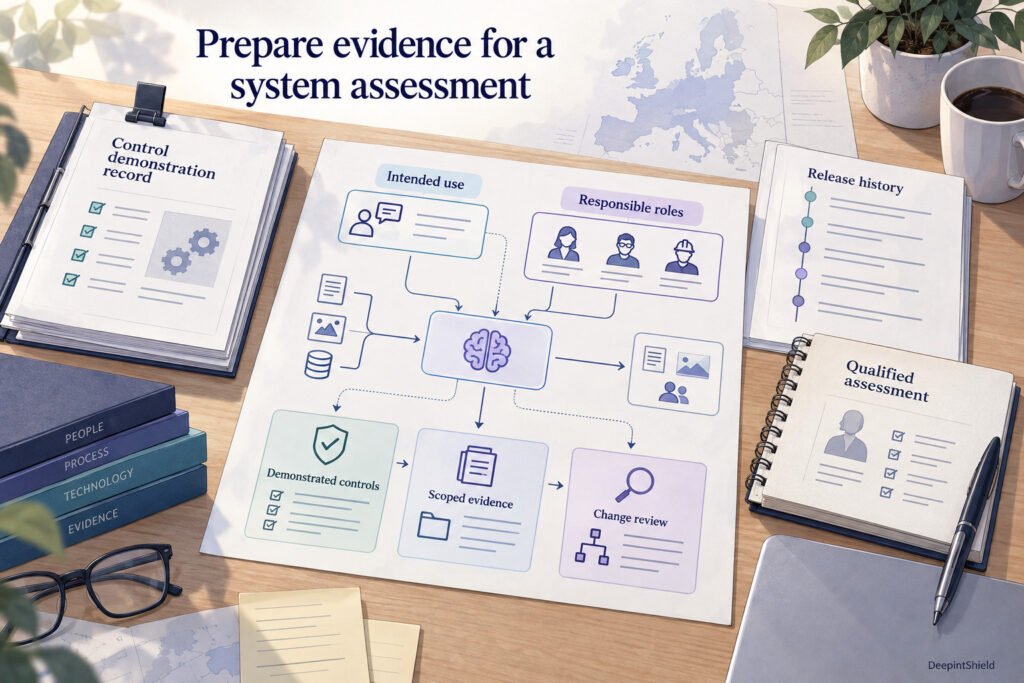
Figure: A system-use map is reviewed alongside control demonstrations, scoped evidence and release changes. Responsible roles and qualified assessment remain part of the preparation.
Describe the real use before mapping controls
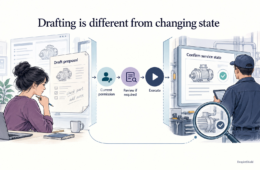
Write a short system description covering its purpose, users, input data, model and connected tools. Explain whether it drafts information, recommends a course of action or changes a system. Include the human decisions that remain outside the automation. Those details are more useful than a broad label such as ‘AI assistant.’
The European Commission describes the AI Act as a risk-based framework for specific AI uses. Ask the responsible legal and governance team to determine the applicable role, obligations and dates using current official guidance. Record that assessment and revisit it when the purpose or operating context changes.
Connect each control to an owner and a test
For a workflow with consequential tool access, describe which actions need permission and which need a separate reviewer. Demonstrate both an allowed call and a call held for review. Show what information the reviewer receives and how the workflow responds when approval is declined or no longer valid.
DeepintShield can support this work through governed agent authorization, action approvals, tool inventory and decision evidence on covered paths. Confirm the plan, workspace setting and integration that enable those controls. A feature name is a starting point for a control description; the test shows how it operates in the actual system.
Build evidence that another person can use
Keep the approved system description, relevant policy versions, representative test results and example decision records together. Include source and tool-change reviews where they explain the system’s behavior. Identify what is captured, who can access it and how long it is retained.
A keyed decision chain can provide tamper-evident records, while an AIBOM can describe the recorded component inventory. Their limits should remain visible: integrity does not prove complete capture or correct decisions, and an inventory is not a compliance certificate. These artifacts support review when their scope and verification process are clear.
Visual guide: EU AI Act Readiness: Practical Controls for GenAI
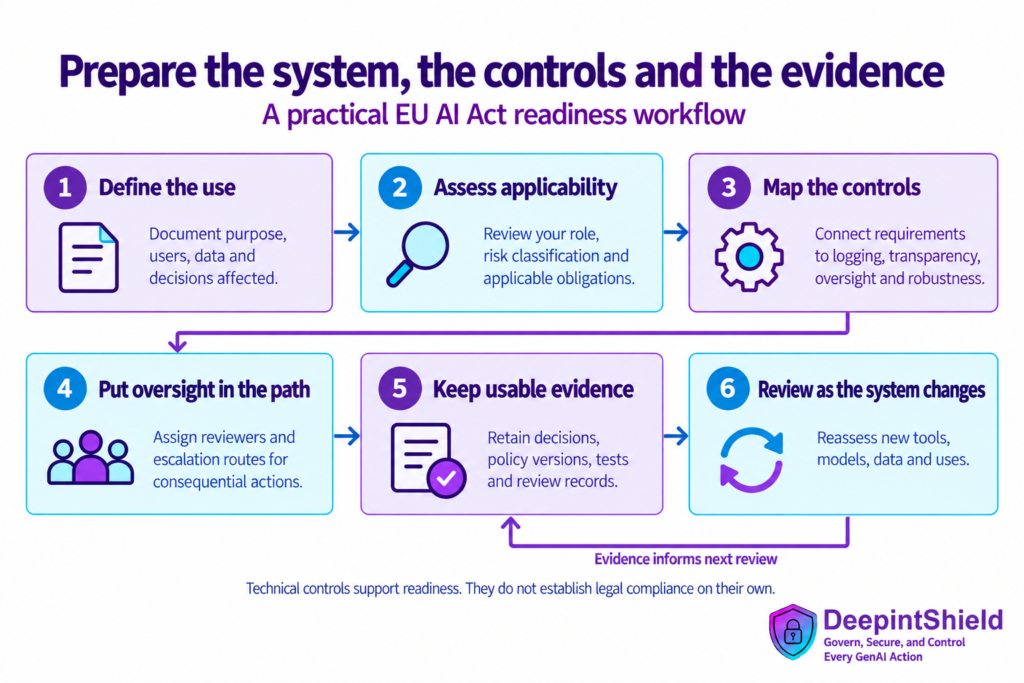
Figure: Six-step diagram for EU AI Act readiness: define use, assess applicability, map controls, arrange oversight, retain evidence and review changes.
Make change review part of normal delivery
Suppose an assistant initially summarizes internal guidance and later gains permission to update a business record. That is a meaningful workflow change even if the interface looks similar. Reassess its controls, reviewer responsibilities and supporting documentation before relying on the original approval.
Also review changes to models, data sources, tool definitions and deployment routes. Maintain task-quality examples and an escalation process for questions the system cannot settle. Readiness is easier to sustain when application owners can explain the system’s current purpose and demonstrate its controls as part of routine release work.
Prepare a system description that supports assessment
Use an illustrative assistant that first summarizes internal guidance and later helps staff submit a business update. Describe its intended users, inputs, sources, generated outputs and available actions in ordinary language. Note who makes the final decision and which systems receive the result. These facts help the responsible legal and governance team assess the actual use; they do not establish a legal category by themselves. The European Commission’s AI Act overview is a primary starting point for current official information.
Include the boundaries people might otherwise overlook: a model can be supplied by one organization, hosted by another and embedded in an application operated by a third. Record the relevant parties and agreements for review without assuming that a gateway deployment determines everyone’s legal role. Identify intended uses and foreseeable workflow changes so reviewers can ask informed questions. Treat this as an engineering evidence package supporting qualified assessment, rather than an automated classification exercise or a claim that every GenAI application has identical obligations.
Demonstrate meaningful human review in the workflow
Where the design requires a reviewer, show what the person sees before deciding: the proposed action, exact target, relevant arguments and sufficient context to understand the consequence. Exercise approval, rejection, expiry and a request submitted by someone who cannot approve it. Confirm that the application handles each result without implying completion. DeepintShield’s agentic security guide documents approval and authorization behavior on governed paths. Whether that arrangement satisfies a particular obligation requires a separate assessment of the system and its use.
Give reviewers a realistic opportunity to act. A queue with no accountable owner, unreadable context or a routine expectation to approve everything will not provide the intended operating safeguard. Measure unresolved items and examine examples where people disagree with the proposed action. Decide how staff stop or correct the workflow when something goes wrong, including who can revoke access and inspect affected records. These practical exercises test the organization’s process rather than asserting that a specific queue or button constitutes legally sufficient oversight.
Keep evidence scoped, verifiable and current
Build a release package that links the system description to deployed configuration, selected test results and representative runtime records. State the routes covered, the collection period and any known gaps. The audit documentation provides a starting point for available records and access review. Verify exports and retention behavior in the chosen environment. A large archive is not automatically useful evidence if a reviewer cannot determine which release, policy or action produced a record or whether the record was complete.
Revisit the assessment when a summary feature gains write access, a new source changes the information handled or a model update materially changes behavior. Keep the earlier review, the change rationale and the new test outcomes connected. Ask the responsible team to check current official requirements and dates rather than copying a stale implementation timeline into technical instructions. Operational controls, documented tests and inventories can support readiness, but they do not substitute for the applicable legal analysis, organizational responsibilities or any required conformity work.
Frequently asked questions
Can an AI gateway determine EU AI Act compliance?
No. It can supply selected technical controls and evidence. Classification and applicable obligations require a system-specific legal and organizational assessment, supported by current official guidance.
Can a gateway or an AIBOM make a system AI Act compliant?
Neither artifact alone establishes compliance. A gateway can enforce configured controls on supported paths, and an inventory can describe recorded components. The relevant obligations depend on the actual system, use and organizational role. Qualified reviewers must assess those facts using current official material and evaluate the wider processes and evidence.
Documentation and further reading
Hallucination Defense & Response Consistency
Related guide: Hash-Chained Audit Logs for AI Decision Evidence