



Secure an internal AI copilot
Give an internal copilot its own Virtual Key, guardrails on prompts and answers, model and budget limits, and a full record of…

Meet DeepintShield at Bengaluru Tech Summit 2026, 17 to 19 November, BIEC Hall 1, booth H1A106. Book 20 minutes
Use cases
AI security use cases are the concrete problems teams solve when LLM apps and agents reach production: keeping personal data out of prompts, stopping prompt injection, controlling agent tool calls, securing MCP servers and proving decisions to auditors. Each page below shows the problem, the controls DeepintShield applies and how to try it.
Six common starting points, from a first internal copilot to agents that act on live systems. Each one maps to a capability of the DeepintShield platform; for rules that differ by sector, see industries.

Keep an internal assistant inside policy: check prompts and answers, and limit models, budgets and access for each team.
Read the use case

Find and redact personal data and secrets in prompts, responses and streaming output before a model or user sees them.
Read the use case

Put every MCP server behind one gateway, with tools filtered per virtual key and pinned tool definitions.
Read the use case

Decide every agent tool call before it runs: allow, deny or require approval, with each decision recorded.
Read the use case

Hold high-risk actions for a designated approver, with separation of duties so an agent’s owner cannot approve them.
Read the use case

Score every retrieved chunk for injection, poisoning and personal data, then allow, redact or reject it.
Read the use case
The grid below can be filtered the same way: security, governance, or cost and reliability.
| Goal | Typical use cases | Capabilities that solve them |
|---|---|---|
| Security | Stop prompt injection; stop personal data leaking to LLMs; protect a RAG app from poisoned documents; secure MCP servers | Runtime Guardrails & PII, RAG Security, MCP Gateway |
| Governance | Control what AI agents can do; add human approval; give every team safe LLM access; prove AI decisions to an auditor | Agentic Security, Governance, Observability & Audit |
| Cost and reliability | Set LLM budgets for each team; fail over between LLM providers; get the same answer from an LLM every time | Cost Optimization, AI Gateway, Hallucination Defense |
Filter by security, governance or cost, or by industry. Each page explains the risk, the controls that address it and how to try it, with links to the matching pages in the DeepintShield docs. To see how the controls fit together, read how it works.

Give an internal copilot its own Virtual Key, guardrails on prompts and answers, model and budget limits, and a full record of…

Detect personal data and secrets in prompts, retrieved chunks, tool calls and answers, then redact or block them inside your own deployment.

Put every MCP server behind one gateway: filtered tool catalogues per key, pinned tool definitions and an explicit Allow for every call.

Give each agent a verified identity and authorise every tool action against exact relationships, with Allow, Deny or Require approval.
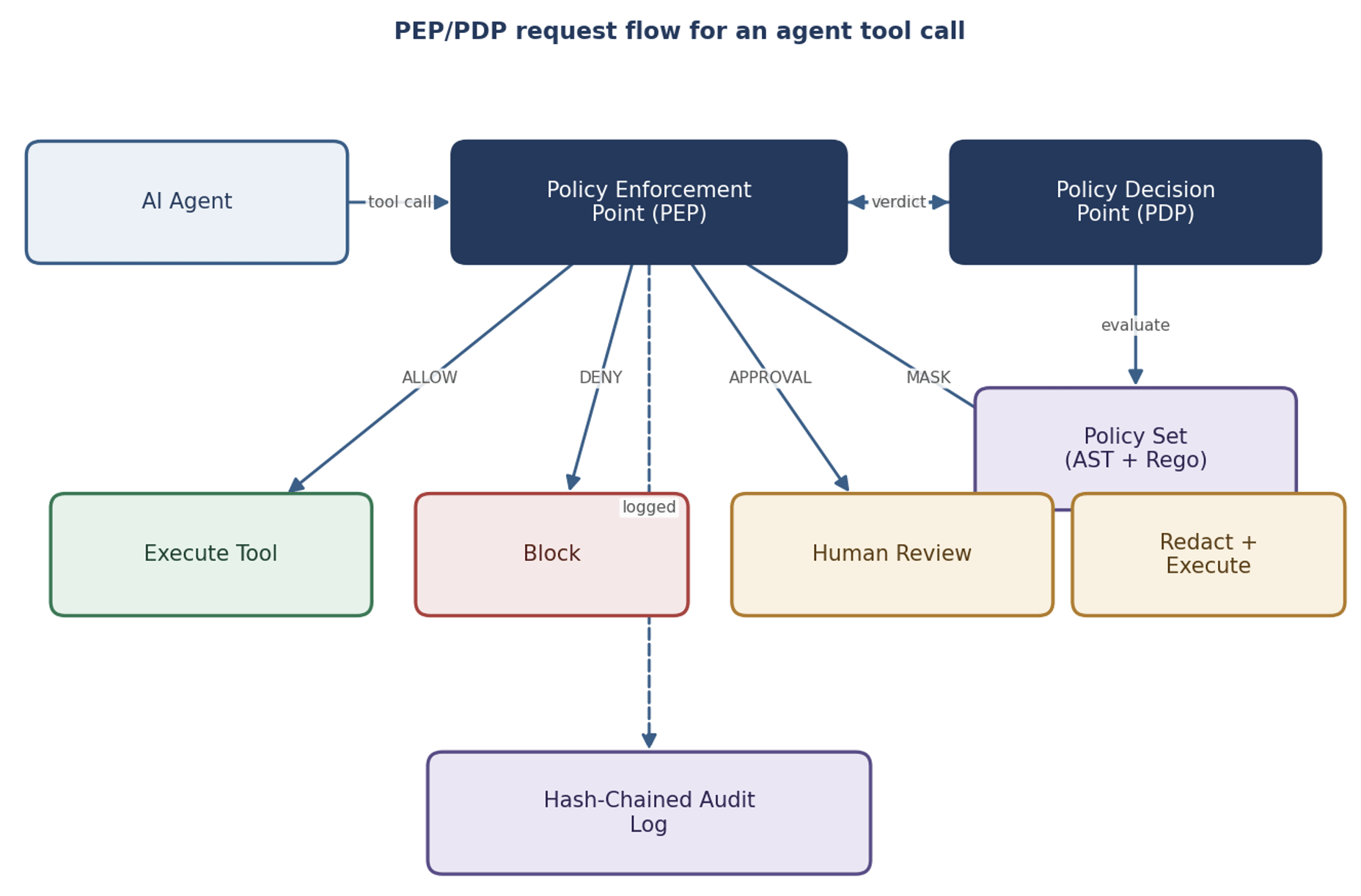
Hold consequential agent actions for a named reviewer, bind each approval to the exact arguments, and keep separation of duties.

Score each retrieved chunk for injection, poisoning, personal data and source trust, then allow, redact, reject or quarantine it.

Layer injection checks across prompts, retrieved content, MCP traffic and answers, and require an explicit Allow before any agent action.

Put 29 built-in model providers behind one OpenAI-compatible API, with Virtual Keys, model lists, budgets and guardrails per team.

Enforce budgets and rate limits at customer, team, Virtual Key and provider level, then cut waste with caching and routing.

Try backup providers in your order, balance traffic across keys and remove failing keys with a circuit breaker, at the gateway.
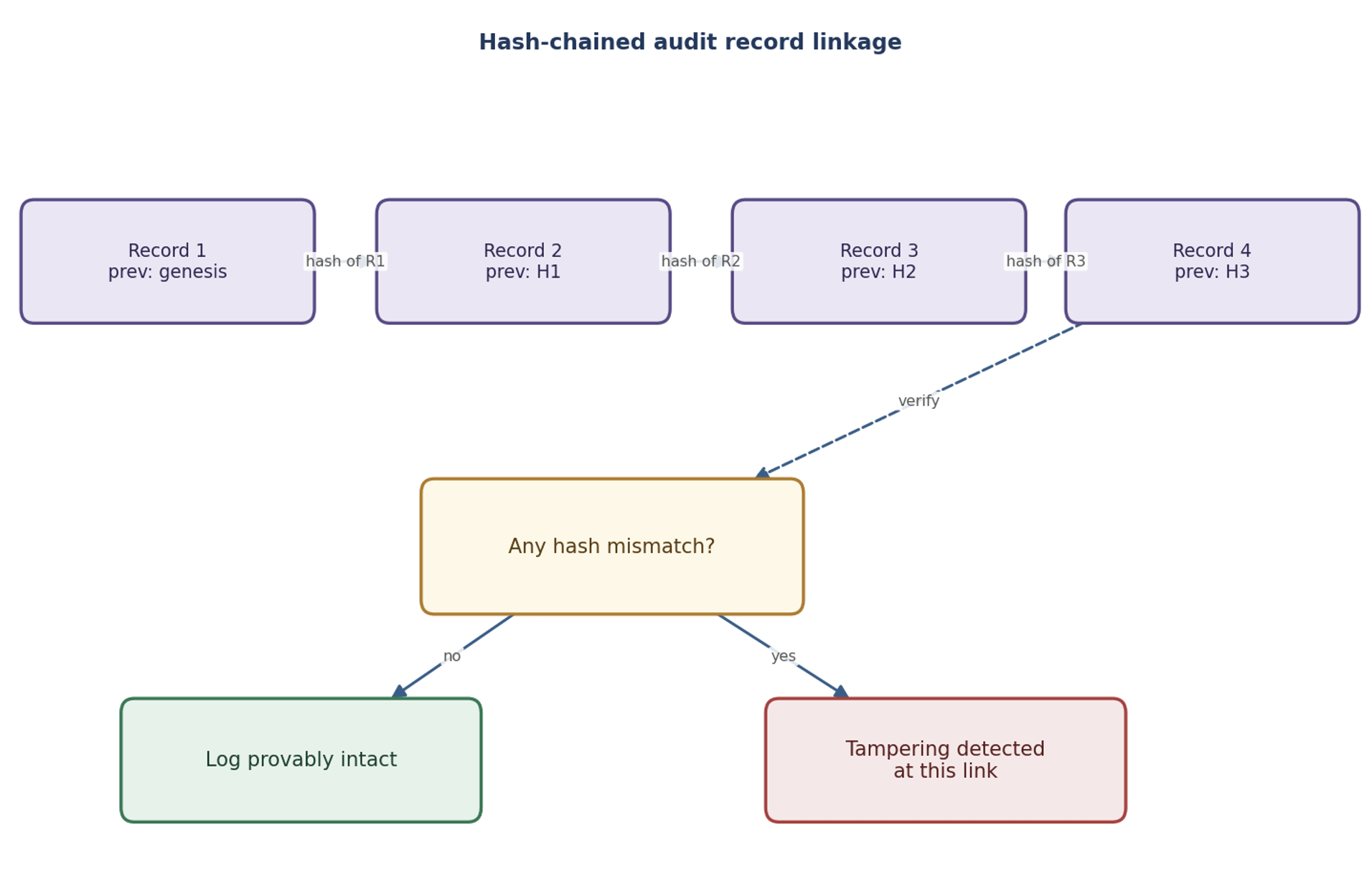
Record each AI decision in a hash-chained ledger, verify the chain, export a tool inventory and map evidence to frameworks.

Reuse approved answers, pin golden answers for known questions and reduce randomness for the rest with Response Consistency.
Start free with your own model keys, or book a 20-minute demo with an engineer on your own stack.