
AI Logs
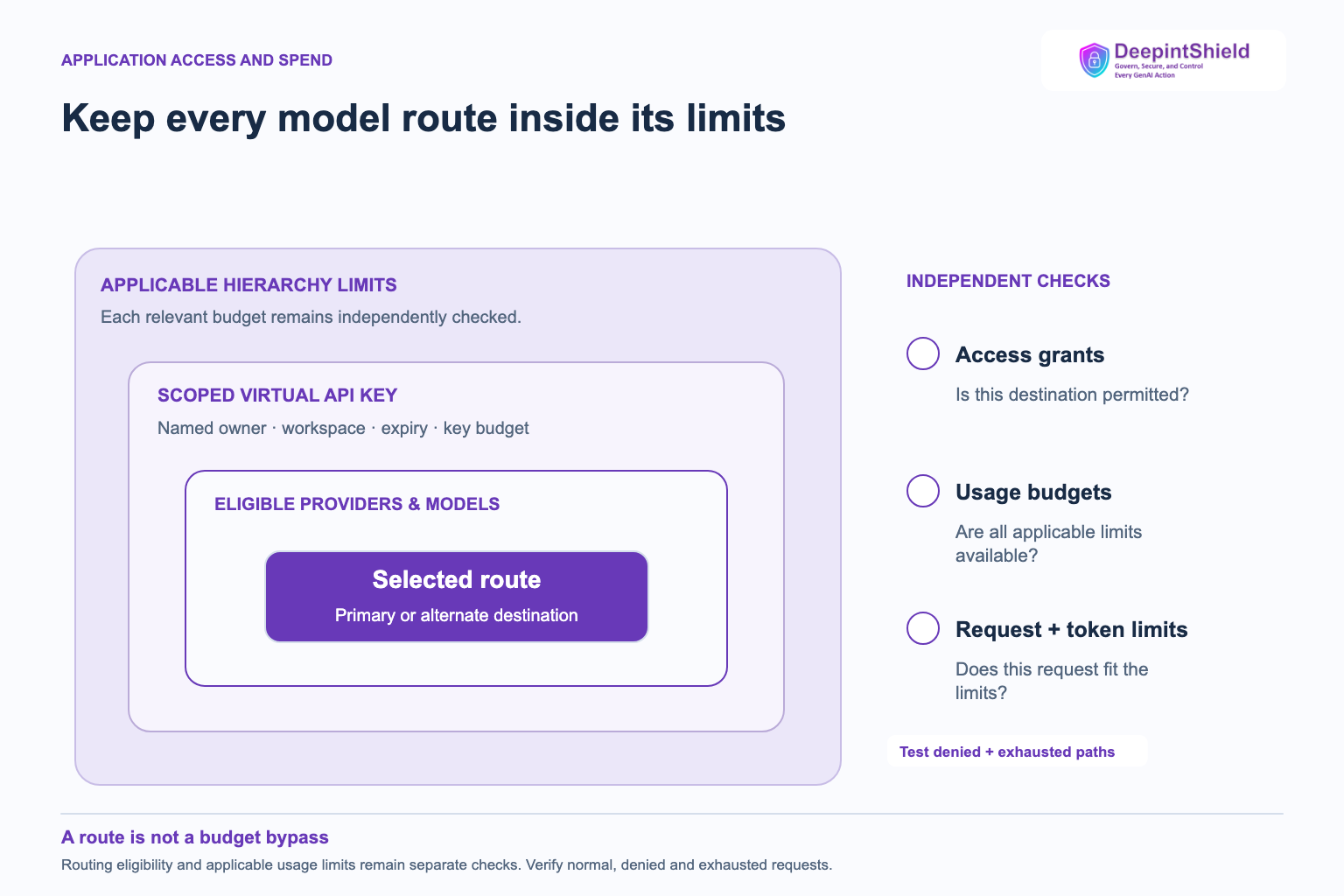
Virtual API Keys: Budgets, Model Access and Routing Boundaries
Virtual API Keys: Budgets, Model Access and Routing Boundaries An application credential should express which AI services the application can use and…
Meet DeepintShield at Bengaluru Tech Summit 2026, 17 to 19 November, BIEC Hall 1, booth H1A106. Book 20 minutes
Platform · Governance
An AI governance platform controls who can use which model, with what budget and under which policy, and records the proof. DeepintShield does this with virtual keys that carry model access, budgets and rate limits, plus role-based access, single sign-on over OIDC and SCIM sync for your people.
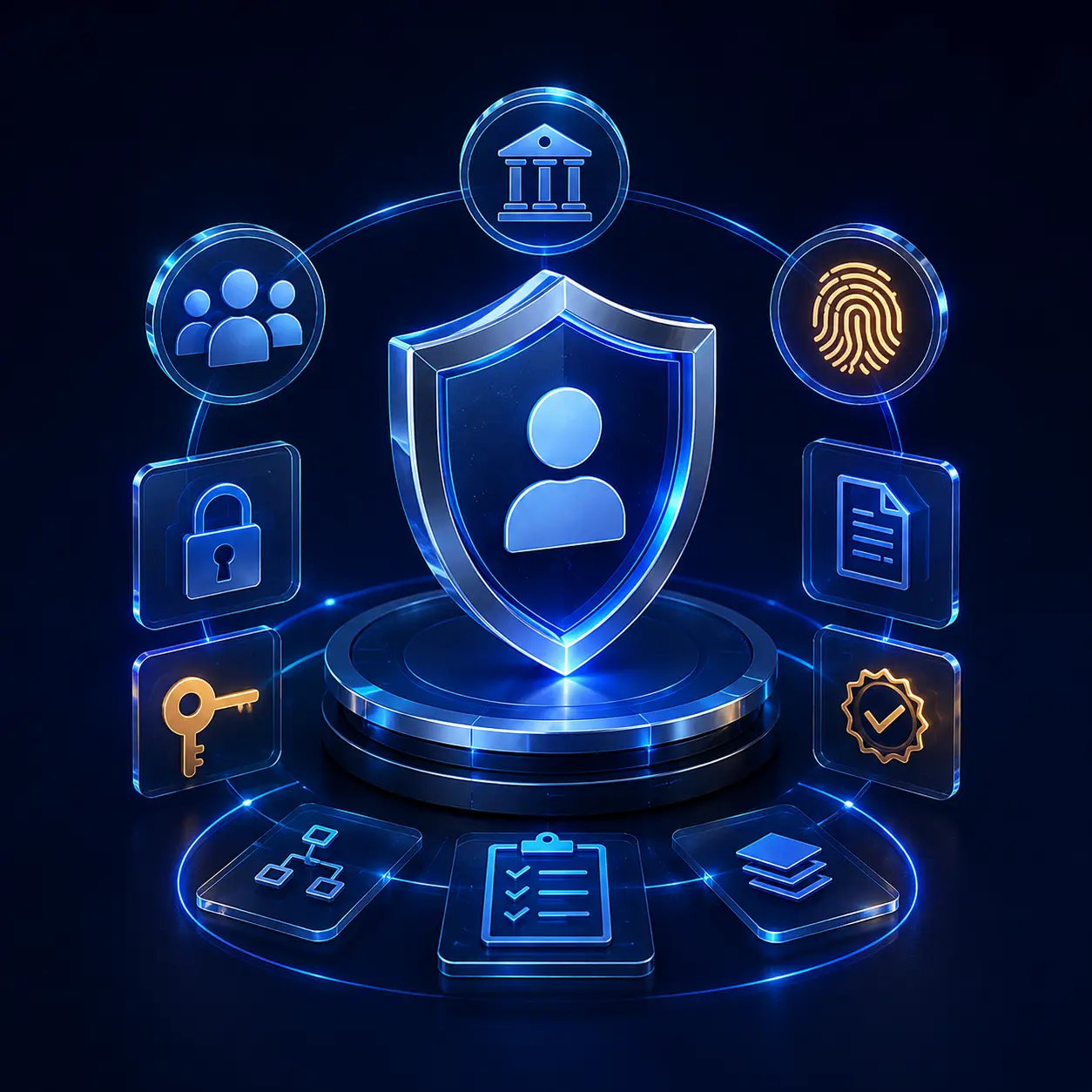
One provider key is pasted into many apps, so nobody can tell who spent what or cut off a single user.
A runaway agent loop or a busy team can run up a large bill before anyone notices.
Without an identity on every request, you cannot show which team used which model, or when.
Governance runs in the same gateway as routing and guardrails. See how a request moves through DeepintShield.
Within a workspace, group usage into teams and customers, each with its own budget and limits.
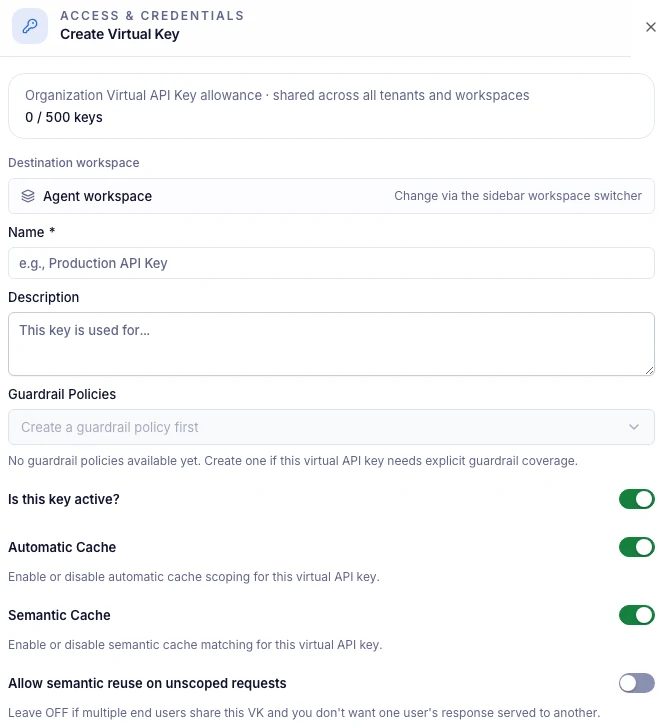
Each sk-ds- key carries allowed providers and models, budgets, rate limits and MCP tools.
Staff sign in through your OIDC provider, with roles and, for Entra ID, SCIM sync.
Required headers, budgets and limits are checked before a request reaches any provider.
Keys carry provider and model access, budgets and rate limits. Provider credentials stay on the gateway, never in your apps.
Budgets plus request and token limits for customers, teams, keys and providers. Every level must pass.
Routing rules written in CEL steer requests. Developer has 1 rule, Team 10, Business 25 and Enterprise unlimited.
A request without a required header gets a 400 error before any provider or MCP tool is called.
A key’s MCP configuration is the outer limit: empty means no tools, and request headers can only narrow it.
Admin and Viewer roles plus custom roles across 14 resources and five operations, from View to Download.
Microsoft Entra ID, Okta, Google Workspace, Auth0 or any OIDC provider, with just-in-time provisioning and domain restriction.
Sync users from Microsoft Entra ID, with several connections per workspace routed by e-mail domain.
Native TOTP multi-factor authentication with single-use recovery codes, including on the free Developer plan.
Teams, customers and per-model budgets need the Team plan or above. Relationship-based authorization with OpenFGA, down to record level, is on Business and above. Compare plans and pricing.
The model catalogue lists every provider and model configured on the AI gateway. Virtual keys then decide which of them a team may call, and per-model budgets and rate limits sit in Model Hub usage controls on Team and above.
 Tap to enlarge(opens the full-size image in a new tab)
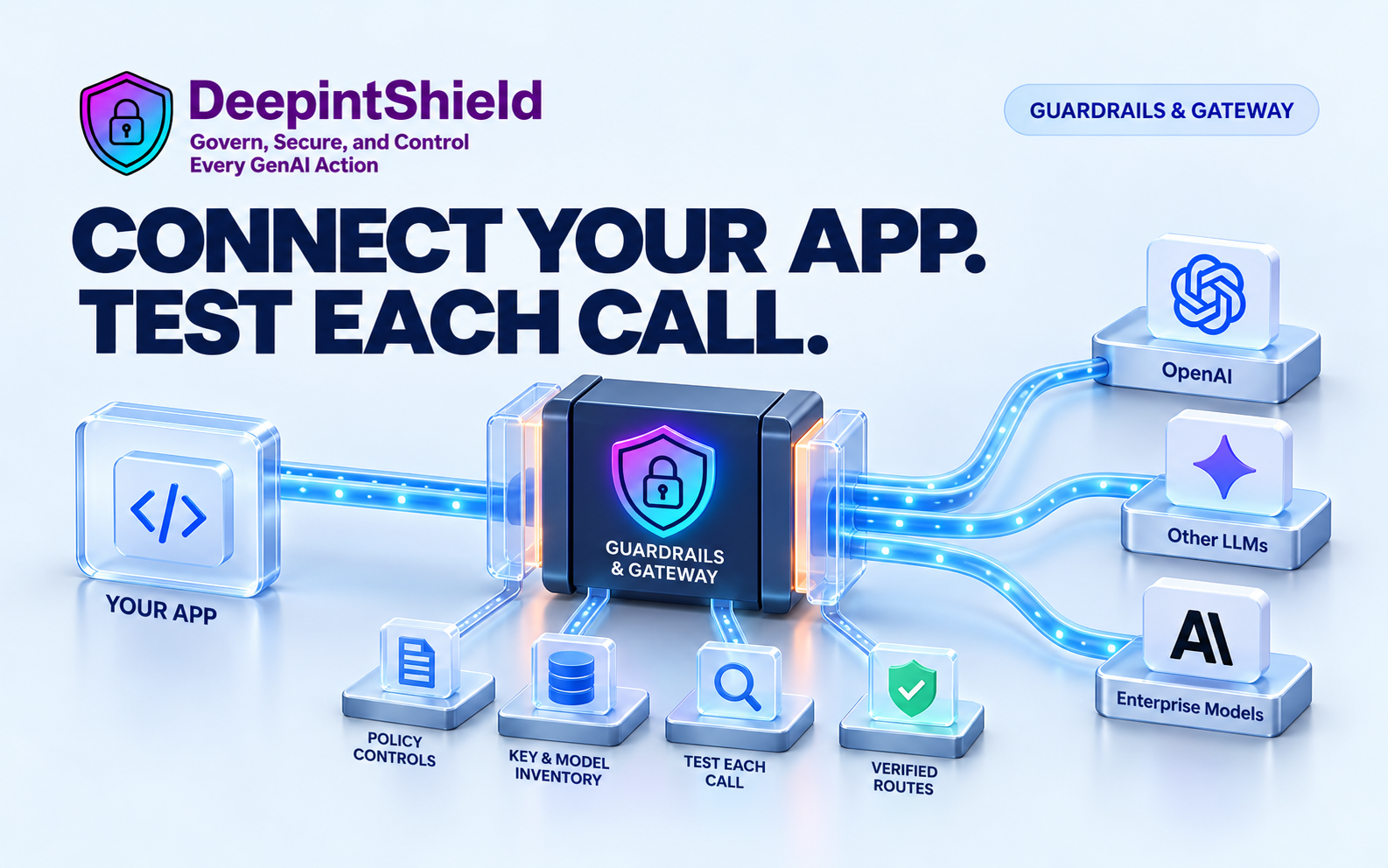
Applications send a virtual key instead of a provider key. The gateway applies that key’s model access, budgets, rate limits and MCP tools, then routes the request. Read the virtual key docs.
x-deepintshield-vk or a Bearer tokenpip install openai
export OPENAI_BASE_URL="https://app.deepintshield.com/v1"
export OPENAI_API_KEY="sk-ds-your-virtual-key"from openai import OpenAI
with OpenAI() as client:
response = client.chat.completions.create(
model="openai/gpt-4o-mini",
messages=[{"role": "user", "content": "Hello!"}],
)
print(response.choices[0].message.content)Mapped to
Mapping supports your own assessment; it does not replace it. Framework detail and evidence exports are on the AI Compliance page.
Virtual API Keys: Budgets, Model Access and Routing Boundaries An application credential should express which AI services the application can use and…
DeepintShield team · · 9 min read
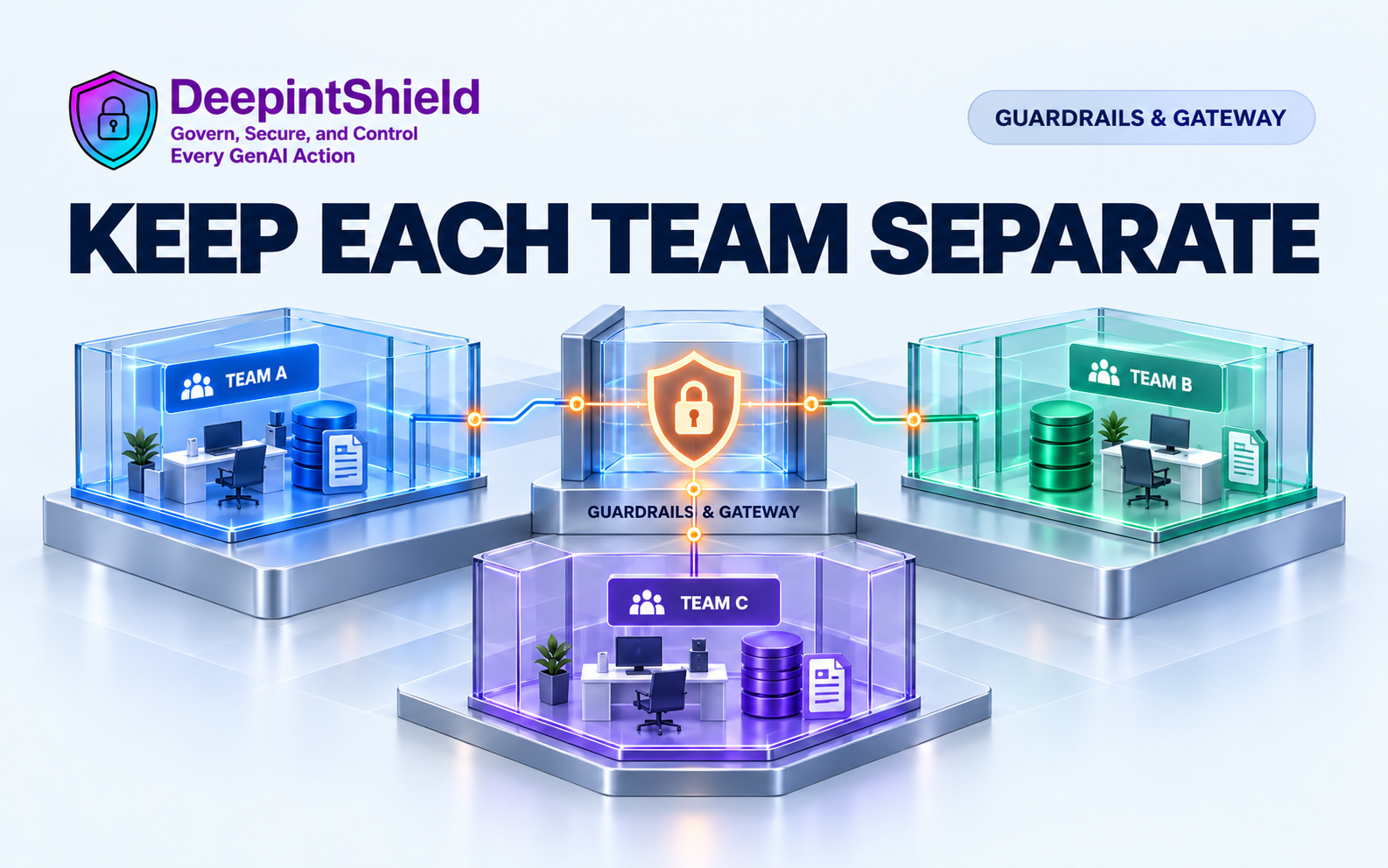
Multi-Tenant LLM Platforms: Workspace Access Boundaries A shared LLM platform becomes easier to operate when teams can reuse infrastructure while keeping their…
DeepintShield team · · 5 min read
OpenAI Gateway Migration: More Than a Base URL Change Changing a base URL can be the first step in an OpenAI gateway…
DeepintShield team · · 5 min read
AI governance is the set of rules and records that decide who may use which AI models and tools, at what cost and under which policy. A governance platform enforces those rules on every request and keeps the evidence.
A virtual key is a DeepintShield key, starting sk-ds-, that applications use instead of a provider key. It carries the models, budgets, rate limits and MCP tools a team may use, while provider credentials stay on the gateway.
Yes, if it supports OIDC. Single sign-on works with Microsoft Entra ID, Okta, Google Workspace, Auth0 and other OIDC providers, and SCIM sync is available for Entra ID. GitHub is not supported as a sign-in connection.
Budgets and rate limits are checked at every level (customer, team, virtual key and provider configuration), and a request must pass all of them. Cost is deducted at each level, and over-budget providers are dropped from routing. See the budgets and limits docs.
Yes. Native TOTP multi-factor authentication is available on every plan, including the free Developer plan, and works with any authenticator app.
Map controls and evidence to NIST AI RMF, ISO/IEC 42001, the EU AI Act and OWASP.
Explore AI compliance
Logs, metrics and a hash-chained audit trail that records who did what, and when.
Explore observability
One OpenAI-compatible API for 29 built-in model providers, with routing, load balancing and fallbacks.
Explore the AI gateway
Issue your first virtual key with a budget on the free Developer plan, or talk to us about rolling out SSO and roles.