Self-Hosted vs SaaS AI Security: Compare Data Flows
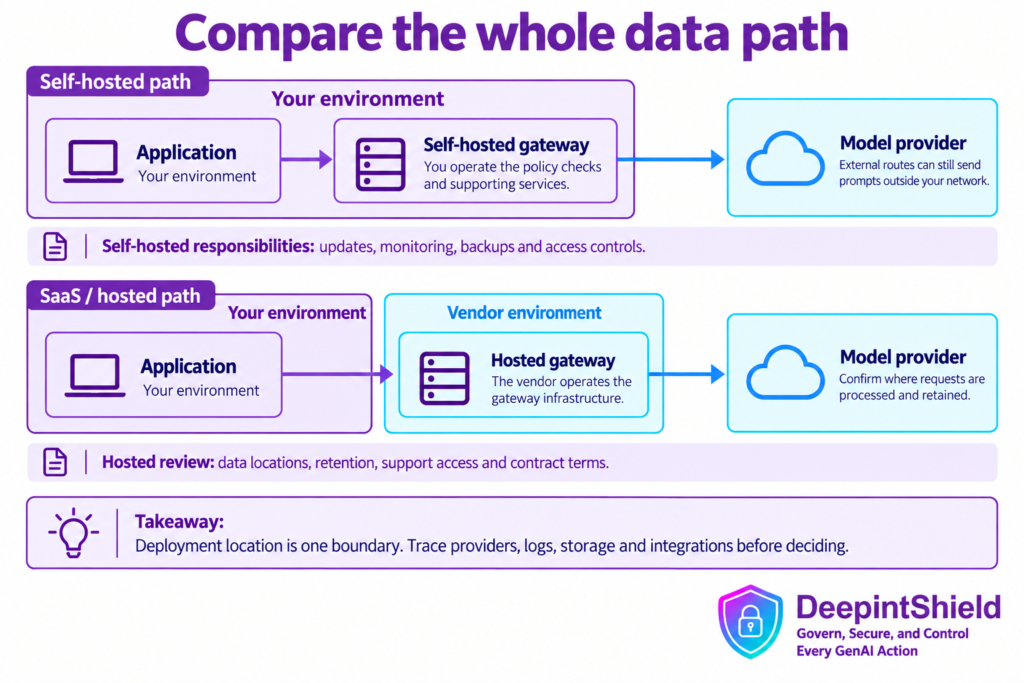
Choosing where to run an AI security gateway is also a choice about who operates it and where information travels. A managed service can simplify infrastructure work; a customer-operated deployment can provide more direct control over the environment. The right comparison follows one complete request, including its model provider, storage and supporting services, before assigning value to a deployment label.
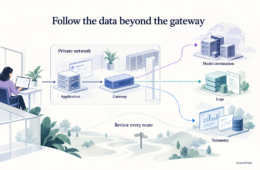
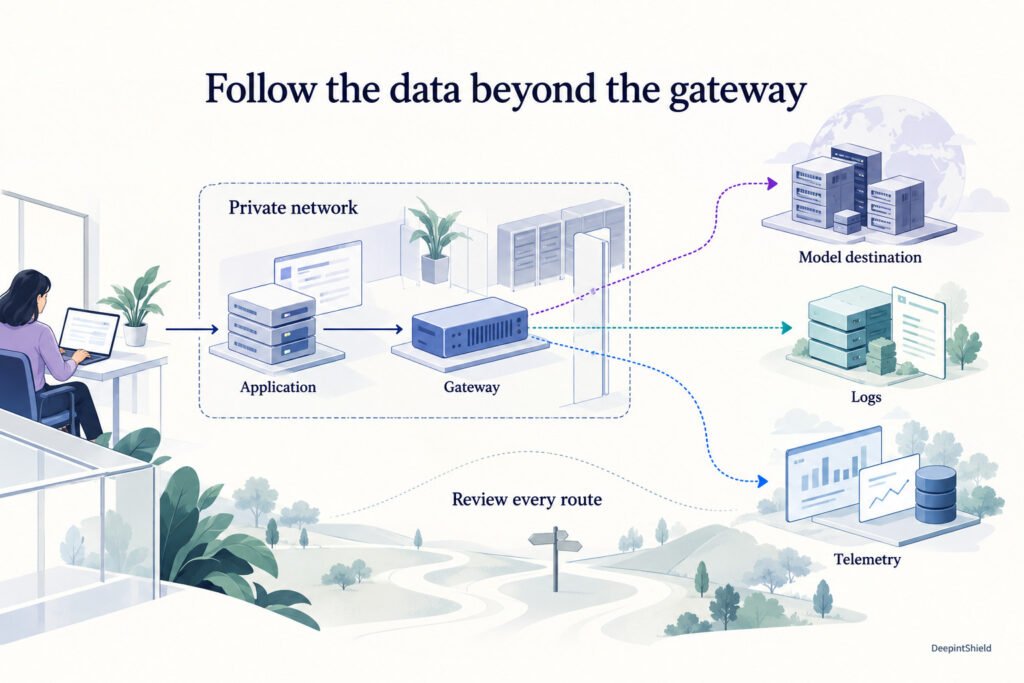
Figure: A network map traces an application request through a gateway to model, logging and telemetry destinations. The private-network boundary makes external routes visible.
Draw the data path first
Start with the application, then add the gateway, model provider, retrieval system, log store, backups and configured telemetry destinations. Mark what each connection carries: request content, credentials, usage metadata or configuration. This often reveals decisions that a simple hosted-versus-local comparison leaves out.
For example, a gateway inside a private network may still send a prompt to an external model provider. A locally hosted model can change that route, while an external classifier or trace exporter may introduce another destination. Review each configured connection against the workload’s data-handling requirements.
Understand the three DeepintShield deployment shapes
DeepintShield documents Cloud, Enterprise VPC and Self-Hosted options. Cloud is vendor-operated. Enterprise VPC places the data plane in the customer’s cloud while DeepintShield manages the control plane. A fully self-hosted deployment puts both under customer operation, with an air-gapped option provided through the Enterprise engagement.
The Enterprise VPC design separates signed configuration and aggregate control-plane traffic from customer request content in the data plane. Treat that as a boundary to validate in the chosen deployment, and review model-provider routes independently. Keeping the control plane out of the ordinary request path does not remove local checks, cache lookups or upstream latency.
Assign operating work explicitly
For each option, identify who updates software, manages certificates and secrets, monitors capacity, restores backups and responds to service issues. Include databases, caches and detector services rather than discussing only the gateway container. A deployment that matches the network design still needs people and procedures to keep it current.
Test recovery with the teams who will operate it. Review what happens when a dependency is unavailable, how the application handles the result, and how configuration is restored. Where a VPC deployment uses last-known-good configuration during a control-plane interruption, confirm the expected update and recovery behavior.
Visual guide: Self-Hosted vs SaaS AI Security: Compare Data Flows
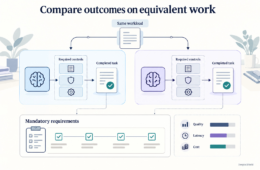
Figure: Two deployment lanes compare a self-hosted gateway inside the application network with a hosted gateway in a vendor environment; both may send approved requests to an external model provider.
Choose with workload evidence
Use a representative request set to measure latency, throughput and resource usage for the selected topology. Include the actual policies, models and logging settings. Compare the operational effort and support arrangements alongside infrastructure cost, because those responsibilities continue after installation.
Record the approved destinations, retention choices and access owners with the deployment decision. Revisit the map when adding a provider, external safety service or telemetry integration. Hosting location supports the broader data-handling design; it does not by itself establish that every requirement has been met.
Compare a concrete confidential-document workflow
Use the same document-review workload for each deployment option. List the document upload, extracted text, model prompt, generated summary and operational records as separate data objects. For each object, identify where it is processed, stored and copied. A local gateway can send extracted text to an external model while keeping request logs in a customer database; another topology might use a local model but export detailed traces elsewhere. Those arrangements have different consequences even though both are casually described as self-hosted.
Create a reviewable destination register with the connection purpose, data categories, authentication owner and retention setting. Include supporting classifiers, embeddings, artifact storage and backup systems where used. Confirm the actual configured route using harmless markers and operational evidence. The deployment overview describes the available product shapes, but the organization must verify its selected configuration. A network diagram prepared before a new provider or logging integration is enabled is no longer a complete description of the operating system.
Test dependencies and recovery responsibilities
For an Enterprise VPC evaluation, rehearse a control-plane interruption in a controlled environment and observe how existing configuration and later updates behave. Separately test the model provider, local database and cache becoming unavailable, because those failures affect different parts of the request path. Record which requests finish, which fail and which require operator action. The Enterprise VPC guide explains the control-plane and data-plane separation; it does not remove the need to test the customer’s actual dependencies and network policies.
For a fully self-operated environment, assign patching, certificate renewal, detector capacity and restore testing to named teams. Measure a backup restoration with a disposable environment and verify that configuration, access and required records return as expected. Include secret recovery without placing plaintext credentials into general backups or test reports. Managed operation shifts some of this work to a provider, but the customer still needs application ownership, data classification and a clear incident contact. Compare the responsibilities that remain on each side of the service boundary.
Make the decision durable beyond initial setup
Run representative load with the policies and logging choices the workload will actually use. Compare successful task throughput and tail latency as well as average request time. A minimal installation with inspection disabled may look inexpensive while saying little about the intended production deployment. Include the cost of databases, monitoring, model traffic and staff work in the comparison, and identify which figures are measured versus estimates. The purpose is an understandable operating choice, not a universal claim that one hosting model is always cheaper or safer.
Keep the approved data-flow map, test results and responsibility matrix with the release record. Revisit them when the application adds an attachment type, external detector or new provider fallback. Verify content logging separately from usage metadata using the observability guide, and inspect whether exporters or application logs retain copies outside that setting. A deployment decision remains useful when the team can explain both its original assumptions and the process for detecting that those assumptions have changed.
Frequently asked questions
Does self-hosting keep every AI request inside the network?
Only when the model routes and dependent services also remain inside the intended boundary. Inspect configured providers, storage and telemetry destinations for the actual workflow.
What evidence should support a private-network requirement?
Show the configured model and dependency destinations, the relevant network controls, and a representative end-to-end request test. Include logs, telemetry and retained artifacts in the review. The gateway’s hosting location alone cannot establish the boundary. Any contractual or regulatory requirement also needs review against the actual deployment and operating responsibilities.