
EU AI Act readiness guide for GenAI teams
Practical preparation steps for teams running generative AI under the EU AI Act: describe the use, assess the role, map controls and keep evidence.
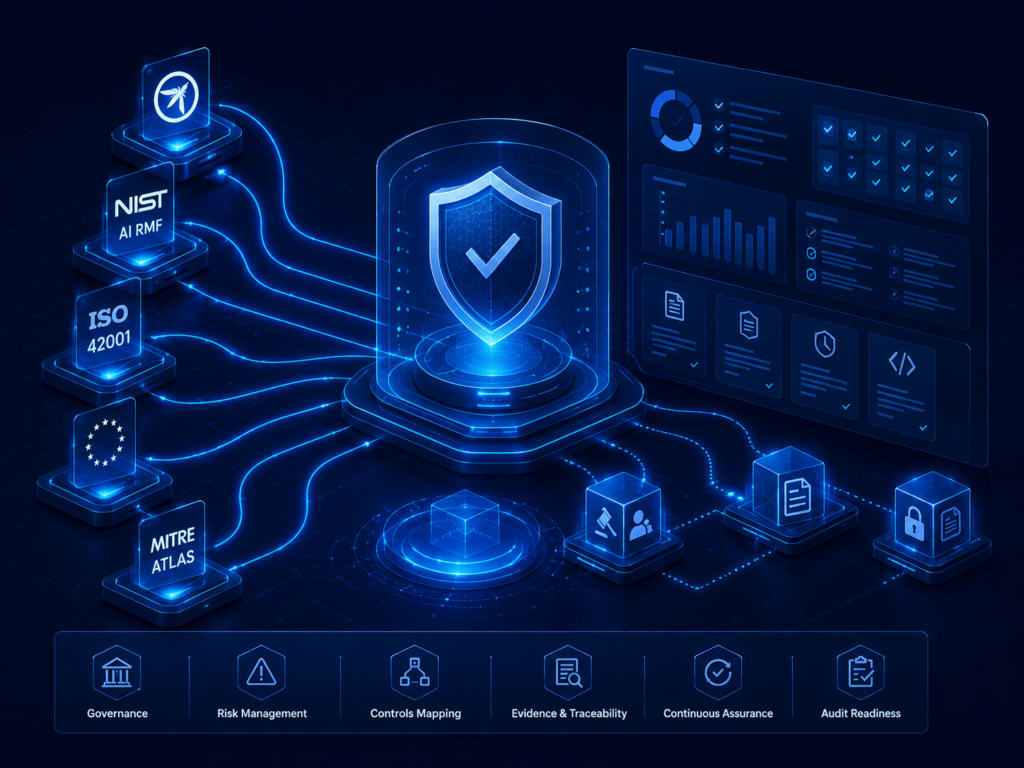
EU AI Act readiness starts with a clear account of what each AI system does and how people use it. The Act is a risk-based framework: what applies depends on the use case and on your organisation’s role, such as provider or deployer. This guide gives generative AI teams practical preparation steps that make a legal assessment easier and leave useful evidence behind.
This is not legal advice. It does not classify your systems or list every obligation. Ask your legal and governance team to decide the applicable role, risk category, obligations and dates, using current official guidance from the European Commission. The Act applies in phases, and timelines can change, so do not copy a fixed timeline into technical plans.
What engineering teams can do now is describe systems accurately, show that controls work, and keep evidence that another person can check. A gateway such as DeepintShield can supply selected technical controls and records on the paths it governs. It cannot satisfy the Act on its own, and neither can an inventory export.
How the Act is structured, in brief
- Prohibited practices. A short list of uses is banned outright, such as certain manipulative techniques and social scoring.
- High-risk systems. Uses in listed areas, such as employment decisions, creditworthiness, access to essential services and education, and AI that is a safety component of regulated products, carry the heaviest duties. Providers need risk management, data governance, technical documentation, automatic record-keeping, information for deployers, human oversight, and accuracy, robustness and cybersecurity. Deployers must follow the instructions, assign competent human oversight, monitor operation and keep the logs under their control.
- Transparency duties. People should know when they are dealing with an AI system unless it is obvious, and certain generated or manipulated content must be marked or disclosed.
- General-purpose AI models. Model providers have documentation and copyright-related duties, with more for models that pose systemic risk.
- AI literacy. Providers and deployers should make sure staff who work with AI have enough understanding to do so responsibly.
Many internal GenAI assistants will not be high-risk, but the same assistant can change category when it gains a new purpose, such as screening job applicants. Your role can also change if you substantially modify a system or put your name on it.
Seven practical steps
- Describe the real use. For each system, write its purpose, users, inputs, model, connected tools and whether it drafts, recommends or changes something. Note the human decisions that stay outside the automation.
- Record the assessment. Give the description to the responsible legal and governance team. Record the role, category and obligations they decide, and the date.
- Map each control to an owner and a test. For example: “agents cannot update customer records without review” needs an owner, a configuration and a test that shows an allowed call and a call held for review.
- Make human oversight real. Show what the reviewer sees, test approval, rejection, expiry and a self-approval attempt, and confirm the application never reports a held action as done.
- Keep scoped, verifiable evidence. Link the system description to deployed configuration, test results and sample runtime records. State the routes covered, the period and known gaps.
- Cover transparency and literacy. Tell users when they are talking to AI where required, and train the staff who run and review the system.
- Review on change. Reassess when the purpose, data sources, model, tools or deployment route change, and keep the earlier review with the new one.
Controls that help, and their limits
These DeepintShield capabilities can support the steps above on governed paths. They help you meet requirements; they are not a conformity assessment.
- Record-keeping: a workspace-scoped, append-only, hash-chained decision ledger, audit logs with “Verify chain”, 730-day default evidence retention and log exports. Integrity shows records were not altered; it does not prove every event was captured.
- Human oversight: Require approval with designated approvers, separation of duties and expiry (Business plan and above).
- Accuracy, robustness and cybersecurity: guardrails at five stages, RAG Security and Hallucination Defense scoring.
- Documentation: an AIBOM of governed tool contracts and decisions classified with EU AI Act crosswalks.
- Personal data at runtime: PII redaction, alongside your existing data protection duties.
Transparency notices to users and staff training remain your application’s and organisation’s job.